Burn the Thesis: The Founders Who Torched Their Original Product and Made the Disrupt 500 Anyway
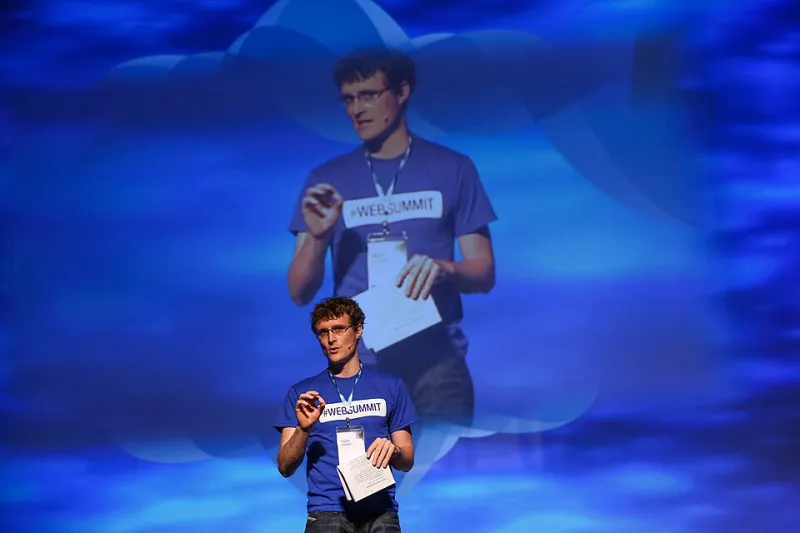
Photo: Web Summit, CC BY 2.0, via Wikimedia Commons
Every founder has a moment they don't put in the pitch deck. For the 14 Disrupt 500 companies we profiled in this analysis, that moment arrived mid-flight — after the product shipped, after the first customers signed, after the money was already spent — when the data made it impossible to keep pretending the original thesis was right.
What separates these companies from the thousands of startups that pivot into oblivion isn't luck. It's speed, sequencing, and a surprising willingness to treat the first product as a research project rather than a destiny. Here's what the record shows.
The Moment of Recognition Rarely Looks Dramatic
In the popular imagination, a pivot is a burning-platform epiphany: revenue cratering, investors circling, a late-night decision to start over. The reality in our dataset is quieter. Twelve of the 14 founders described the realization arriving through a single anomalous signal — a customer using the product in a way it was never designed for, a sales call that kept stalling on the same objection, a usage dashboard where one feature quietly outperformed everything else.
A logistics software founder based in Columbus described it as "reading our own churn data like a confession." The company had spent eleven months building a freight-matching marketplace. Nobody used the matching engine. What customers couldn't stop talking about was the side tool the team had built to audit carrier compliance — a feature that took two weeks and was never meant to be the product.
That pattern repeated across nearly every company we examined: the pivot target was already visible inside the failing product. The founders who succeeded weren't inventing something new. They were noticing something they'd already built.
The First 48 Hours: A Reconstructed Timeline
To understand what a successful pivot actually looks like in motion, we reconstructed the opening hours from founder interviews, internal communications, and board materials. The successful pivots followed a strikingly consistent sequence.
Hours 0–6: Kill the ambiguity, not the company. In every case, the founding team convened — usually in person — and made one binary decision: is the original thesis dead, or just wounded? Founders who deferred this question almost always lost the following months. The teams that moved fast framed it bluntly. One Denver-based founder put it to her team as a single slide: "We are wrong about who the customer is. We are right about what they need."
Hours 6–24: Inventory what survives. Rather than starting from zero, the fastest pivots ran a hard audit of existing assets — code, customer relationships, proprietary data, and, critically, credibility. Nine of the 14 companies discovered their strongest asset was a relationship with a customer who trusted them enough to co-design the replacement product. That trust, built under the old thesis, became the distribution advantage under the new one.
Hours 24–36: Pick one customer and get uncomfortable. The successful teams didn't validate the new thesis with surveys. They called the single customer whose behavior had revealed the anomaly and asked for something founders rarely request this early: a paid commitment or a signed letter of intent for a product that didn't yet exist. Ten of the 14 secured one within this window. The four that didn't still proceeded — but with a defined kill date, typically 90 days.
Hours 36–48: Rewrite the story before the market notices. The final stretch was communications, not code. Founders drafted a one-page internal memo explaining the new thesis in plain language, then pressure-tested it on their earliest investors. Teams that skipped this step — treating the pivot as an operational change rather than a narrative one — consistently struggled to raise their next round, even when the new metrics were strong.
Why Some Pivots Stuck and Others Didn't
The follow-through is where the sorting happens. Among the 14 companies, the pivots that carried them to the Disrupt 500 shared four early signals, visible within the first two quarters:
- Retention improved before revenue did. Every successful pivot showed usage gains in the first two quarters, with revenue following two to three quarters behind. Teams that chased early revenue before retention stabilized tended to rebuild the same fragility under a new logo.
- The team stayed largely intact. Thirteen of 14 companies retained at least 80% of their engineering staff through the transition. The one company that gutted its team spent a year rebuilding institutional knowledge it had already paid for.
- The old product was sunset, not shelved. Companies that formally retired the original product — migrating or refunding remaining customers within 60 days — avoided the resource drain of maintaining two theses.
- The founder retold the origin story quickly and without embarrassment. This sounds soft, but it showed up in hiring data: companies where the CEO openly narrated the pivot attracted candidates who joined for the new mission rather than the old résumé.
The failures, by contrast, tended to hedge. They kept the legacy product on life support, split engineering resources, and described the change as an "expansion" rather than a replacement. Hedged pivots didn't fail loudly. They failed slowly, in increments that were easy to explain away quarter by quarter.
The Two-Year Clock
Perhaps the most striking finding is temporal. The companies in this cohort didn't merely pivot fast — they compressed the entire arc from abandonment to breakout into roughly 24 months. That's only possible when the pivot is treated as a reallocation of existing momentum rather than a restart.
For founders staring down their own moment of recognition, the lesson from this cohort is counterintuitive: the fastest way forward is usually through the evidence you're avoiding. The signal is already in your dashboard. The customer who's using you wrong is already your roadmap. The only genuinely irreversible mistake is spending another quarter pretending the original thesis is merely having a bad year.
The Disrupt 500 has never rewarded stubbornness. It rewards the founders willing to burn the thesis — and keep the fire's warmth.