Design Partners and Discounted Dreams: How Unproven Founders Signed Enterprise Giants in 90 Days

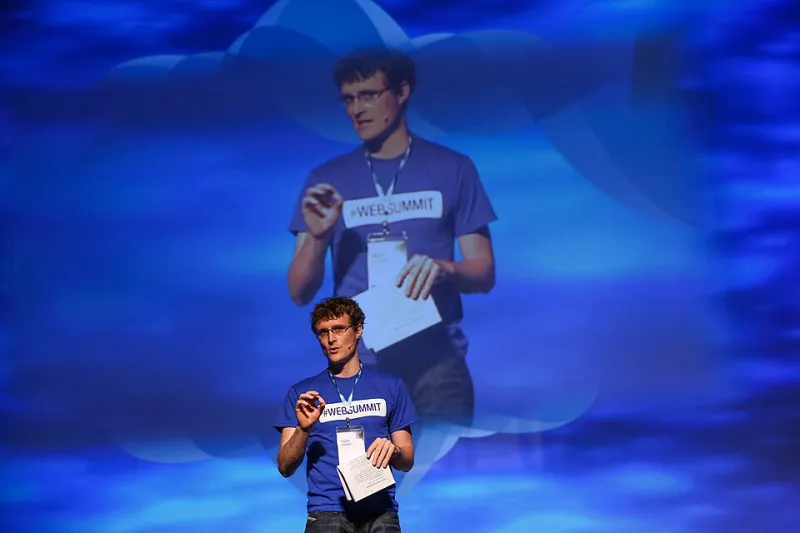
Photo: NickC23, CC BY 4.0, via Wikimedia Commons
The pitch deck was eleven slides. The product was zero lines of production code. And yet, sixty-one days after incorporation, the founders of a Columbus-based logistics software startup had a signed contract with one of the ten largest freight carriers in North America.
Stories like this show up constantly across the 2025 Disrupt 500, and they tend to get filed under 'hustle' — as if landing an enterprise logo on a startup's balance sheet were a personality trait. It isn't. Across dozens of interviews with founders, sales leaders, and — critically — the procurement executives who said yes, a clearer picture emerges: early enterprise sales is a craft with rules, and the founders who break in fastest are the ones who learn those rules before they need them.
The Logo Is the Product
The most common mistake first-time enterprise founders make, according to sales veterans we spoke with, is treating the customer as validation. The Disrupt 500 founders who landed logos in their first quarter treated the customer as the product roadmap itself.
'I didn't sell them software,' one founder told us. 'I sold them a seat at the table. Six figures, eighteen months of pricing preference, and a standing call with my engineering lead every Thursday. In exchange, their logo went on my website the day the press release went live.'
This is the design partner arrangement — a structure nearly as old as enterprise software but executed with new aggression by this cohort. Rather than offering a pilot, which signals uncertainty, these founders offered a partnership: discounted pricing locked in early, co-marketing rights, and direct influence over the roadmap. The buyer isn't taking a risk on a product. They're buying leverage over one.
What the Buyer Was Actually Thinking
We asked a former SVP of procurement at a Fortune 200 manufacturer why anyone signs with a company that has no customers. Her answer was blunt: 'Because sometimes the risk of waiting is bigger than the risk of betting.'
She described the calculus in detail. Incumbent vendors raise prices 6 to 9 percent annually. A startup hungry for a reference logo will often commit to multi-year pricing that saves seven figures. And the influence over the roadmap — the ability to demand features a legacy vendor would never prioritize — is something money usually can't buy.
The diligence, she said, isn't skipped. It's redirected. Buyers who take a chance on unproven startups check the founders' backgrounds obsessively, demand source-code escrow, negotiate aggressive termination clauses, and limit initial exposure to a single department. 'We weren't betting the company,' she said. 'We were betting one team's quarter.'
The Founder-Led Demo Doctrine
Across the first-quarter closers on this year's list, one pattern is nearly universal: no one had hired a salesperson. Every early deal was founder-led, and most were demo-led in a way that inverted the standard software sales motion.
Instead of walking a prospect through a polished product, founders built a bespoke mockup of the prospect's own workflow — sometimes overnight — and presented it as if it already existed. One founder described rebuilding his demo four times in a week for a single healthcare account, each version incorporating language lifted directly from the prospect's own earnings calls. The deal closed in nineteen days.
The lesson the cohort repeats: enterprise buyers don't buy products in a first meeting. They buy the feeling that a vendor understands their business better than they do. A generic demo signals a generic company. A demo that references the buyer's actual org chart signals a partner.
Pricing as a Signal
The second-quarter logo chasers share another habit: they refuse to be cheap. The instinct to price low 'while we're early' turns out to be self-defeating at the enterprise level, where price is read as a proxy for seriousness.
Several founders told us they anchored their first enterprise contracts at 80 to 100 percent of what an established competitor would charge, then justified the number with services, support commitments, and roadmap influence rather than discounts. The design partner discount, when it exists, is framed as compensation for something specific — references, case studies, executive access — not as charity.
'If you discount 70 percent, you're not a startup with a deal,' one revenue leader who now advises three Disrupt 500 companies told us. 'You're a science project, and science projects get cut in the next budget cycle.'
The Ninety-Day Clock
Why does the first quarter matter so much? Because enterprise sales cycles are long, and the clock starts on the founder's calendar, not the buyer's. A logo signed in month three becomes a reference by month nine, which becomes pipeline in year two. A logo signed in month eighteen is just a logo.
The founders who moved fastest treated their first quarter as a sales quarter, full stop. Product came second. Fundraising came third. One founder described blocking every morning for outbound and every afternoon for customer builds — no investor meetings allowed until the pipeline had 'at least three names bigger than ours.'
That discipline shows up in the data. Among this year's Disrupt 500 entrants that closed a seven-figure enterprise contract within 120 days of incorporation, the median time to their second such contract was under seven months. Momentum, it turns out, is a compounding asset.
The Uncomfortable Truth
None of this is magic, and none of it is comfortable. The first enterprise logo is usually won by a founder doing things they're bad at — cold outreach, awkward demos, pricing conversations with people who negotiate for a living. The playbook works precisely because most founders won't follow it.
But for the ones who do, the payoff compounds fast. A marquee logo in the first quarter doesn't just de-risk the company. It rewrites how investors, hires, and the next hundred prospects see it. On the 2025 Disrupt 500, the difference between the companies that broke out and the ones that stalled often traces back to a single signature — and the ninety days of stubborn, unglamorous work that produced it.